




Foundation program

IMA
- 30 Classes
- 4.8 (33 Review)
Descriptions
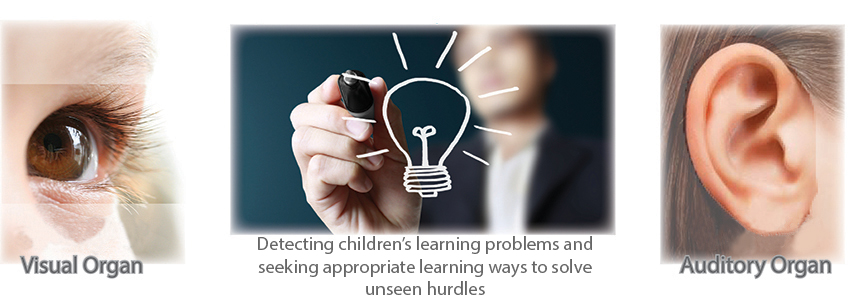
Multi sensory training—To promote the interaction and communication between the left and right halves of the brain intelligent foundation course applies the coordination of vision and auditory with the participation of echoic memory and the spatial touch by hands to facilitate the interaction and communication between the left and right hemispheres of the brain. It puts the whole brain in a stable state and enhances the direction and duration of thinking process. Thus, the abilities in—analysis—judgment—reasoning—observation will be enhanced.
Visual perception—Visual spatial skills can be separated into two main categories, visual perception and visual-motor integration. Visual perception is the ability to understand what is seen. It allows us to find things, notice differences between items and remember things we have seen. Visual–motor integration is the ability to coordinate what you see with body movements. Copying text from the board or from a book is another task that requires efficient visual—motor integration since the child shifts his gaze from far to near or from the book at his side to the paper in front of him. Weaknesses in visual–spatial skills can lead to academic difficulties in areas such as—reading—handwriting—spelling—maths. Children with visual–spatial weaknesses may struggle with—colouring—assembling puzzles—manipulating fasteners—tying shoes. Sometimes, their social skills are affected as well since they misinterpret nonverbal communication signals such as facial expressions and body language.
Eye tracking and dyslexia—Visual tracking is defined as efficiently moving the eyes from left to right or focusing on an object as it moves across a person’s visual field. This skill is important for almost all daily activities including—reading—writing—copying—drawing—playing. Thus, children with eye tracking problems often struggle in school because they always lose their place, skip or transpose words and have difficulty comprehending. They can’t accurately move their eyes across a page and tend to use their fingers to track words. This can also make reading a more uncomfortable and tiring process. There have been many reports of dyslexic people suffering from this problem. This may explain some of the classic symptoms of dyslexia, such as text blurring, letter reversal and missing out words when reading.
Eye tracking and dyslexia—Visual tracking is defined as efficiently moving the eyes from left to right or focusing on an object as it moves across a person’s visual field. This skill is important for almost all daily activities including—reading—writing—copying—drawing—playing. Thus, children with eye tracking problems often struggle in school because they always lose their place, skip or transpose words and have difficulty comprehending. They can’t accurately move their eyes across a page and tend to use their fingers to track words. This can also make reading a more uncomfortable and tiring process. There have been many reports of dyslexic people suffering from this problem. This may explain some of the classic symptoms of dyslexia, such as text blurring, letter reversal and missing out words when reading.
Classes Includes:
- Age:
- 3-5 year
- Duration:
- 9:00-11:00
- Lessons:
- 15
- Students:
- 50
- Certifications:
- Yes
- Language:
- English